dyyseo

Dielectric materials are electrical insulation materials that can store charges. The dielectric constant is an important performance indicator of dielectric materials, used to measure the response of materials to charge storage capacity in an electric field. The dielectric constant is divided into two types: relative dielectric constant and absolute dielectric constant, among which the relative dielectric constant is commonly used in the study of dielectric materials. There are many commonly used dielectric materials, including:
1. Oxides: nano barium titanate (BaTiO3), nano titanium dioxide (TiO2), alumina (Al2O3), etc;
Example: Barium Titanate (BaTiO3): Barium Titanate is a high-performance and widely used ferroelectric ceramic
Ceramic materials can be used for polymer modification to improve the dielectric constant of materials. It is also widely used in the fields of capacitors, ceramic piezoelectric materials, sensors, etc.
The dielectric constant of epoxy resin is relatively low (about 3-4), and filling epoxy resin with nano BaTiO3 can significantly improve its dielectric constant.
Adding BaTiO3 to epoxy resin resulted in a composite material with a dielectric constant of around 50. The size of filler particles, type and dosage of coupling agent have a significant impact on the dielectric properties.

Example: Titanium Dioxide (TiO2): TiO2 is a widely used material with excellent photocatalytic, optoelectronic, and charge transfer properties. Its high dielectric constant (about 200) makes it widely used in electronic devices, solar cells, and optoelectronic devices.
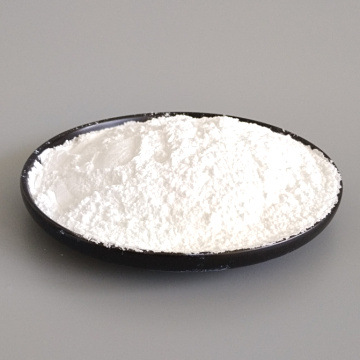
BaTiO3

2. Polymers: polytetrafluoroethylene (PTFE), polypropylene (PP), polyethylene (PE), etc;


3. Ceramics: iron oxide (Fe2O3), strontium silicate (SrTiO3), zirconia (ZrO2), etc. In dielectric materials, the addition of nanoparticles can significantly increase the dielectric constant of the material. Dongguan SAT NANO New Materials Company provides high-quality products such as nano metal powder, oxide powder, carbide powder, alloy powder, etc. The addition of these nano materials can effectively improve the performance of dielectric materials. For example, adding nano barium titanate to epoxy resin can yield a dielectric constant of around 50.

The influence of composite materials, filler particle size, coupling agent type and dosage on dielectric properties is significant. In addition, nano titanium dioxide is also a material with excellent dielectric properties and wide applications, which can be used to prepare high-performance capacitors, sensors and other equipment.
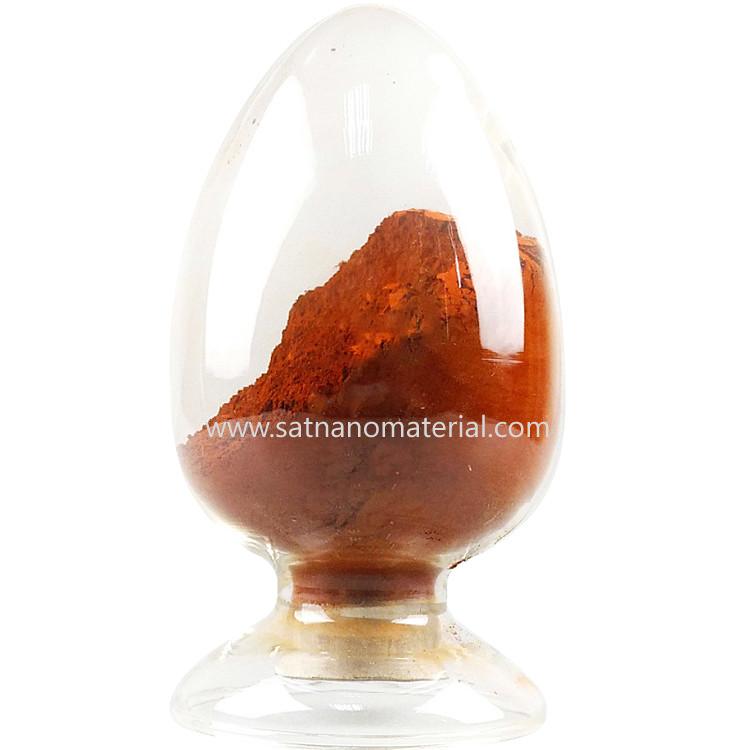
iron oxide powder

In short, there are various types of dielectric materials, and different materials have different dielectric constants and performance characteristics. In practical applications, selection and processing need to be based on specific requirements. And the high-quality nanomaterials provided by Dongguan SAT NANO New Materials Company can provide various
The application of dielectric materials in the industry provides support, providing an effective way to achieve high-performance and low-cost goals.
1. Intrinsic Color: Black

Bulk (micron-scale) pure Fe3O4(Magnetite) appears deep black under visible light.

  • Reason: Fe3O4 is a narrow-bandgap semiconductor (bandgap ≈0.1≈0.1 eV), which absorbs light across the entire visible spectrum with virtually no reflection, resulting in a pure black appearance.
  • Industrial products: Larger-particle Fe3O4powders (micron-scale or highly crystalline nanoparticles), if kept free of surface oxidation, retain the standard black color.


2. The Nanoscale Color Shift: Reddish-Brown / Russet

When Fe3O4 particle size is reduced to the nanoscale (typically < 30 nm), the color often shifts from pure black toward reddish-brown or russet. This is driven by two synergistic factors:


A. Surface Oxidation (Primary Cause)

Nanoparticles possess an extremely high specific surface area, with surface atoms accounting for a vastly greater proportion than in micron-scale particles. Fe3O4 nanoparticles readily undergo surface oxidation when exposed to air, water, or during synthesis:

4 Fe3O4+O2⟶6 γ-Fe2O34 +O2⟶6 γ-Fe2O3

  • Result: A "Core-Shell" Structure forms:
    • Core: Retains black Fe3O4(magnetite).
    • Shell: Oxidized into brown-colored γ-Fe2O3 (maghemite).
  • When the particle size is extremely small (e.g., 10-15 nm), the shell-to-core volume ratio becomes significant, and the overall color shifts from black toward reddish-brown.
  • The smaller the particle, the larger the specific surface area, the higher the degree of oxidation, and the more pronounced the red/brown hue.


B. Quantum Size Effects & Light Scattering

  • Absorption Band Blue-Shift: Due to quantum confinement effects, the absorption spectrum of nano-Fe3O4Fe3O4 undergoes a blue-shift relative to the bulk material. The originally full visible-light absorption is weakened, allowing selective scattering or reflection of shorter wavelengths.
  • Rayleigh Scattering: When particle dimensions are far smaller than visible wavelengths (380-780 nm), Rayleigh scattering dominates. Scattering intensity is inversely proportional to the sixth power of particle size, meaning shorter wavelengths (blue-violet) are scattered more strongly, shifting the reflected light toward warm tones (red/brown).


3. Color vs. Particle Size / Purity Summary

Appearance

Corresponding State
Probable Cause
Pure Black
Large particles (> 100 nm) or strict oxygen-free protection
Intact lattice, no surface oxidation, full-spectrum absorption
Dark Brown-Black
Medium particles (30-50 nm), minor air exposure
Surface oxidation begins; thin γ-Fe2O3 shell forms
Reddish-Brown
Ultra-fine particles (< 20 nm), stored in air
Significant oxidation; shell thickness comparable to core; color dominated by γ-Fe2O3

Bright Red
Fully oxidized or high-temperature calcined
Completely converted to α-Fe2O3 (Hematite); no longer Fe3O4


4. Practical Engineering Recommendations

  • If your application requires pure black Fe3O4 (e.g., black pigments, magnetic displays):
    • Source products with a particle size of 50-100 nm or larger.
    • Store under vacuum or inert gas to prevent prolonged air exposure.
    • During synthesis, conduct hydrothermal reactions under an argon or nitrogen atmosphere.
  • If the reddish-brown color is acceptable (e.g., microwave absorbers, catalytic applications):
    • A thin oxidation layer has a limited impact on magnetic properties and conductivity — the powder remains fully functional.
    • The reddish-brown appearance actually confirms that the particle size has been successfully controlled at the nanoscale


keyboard_arrow_up