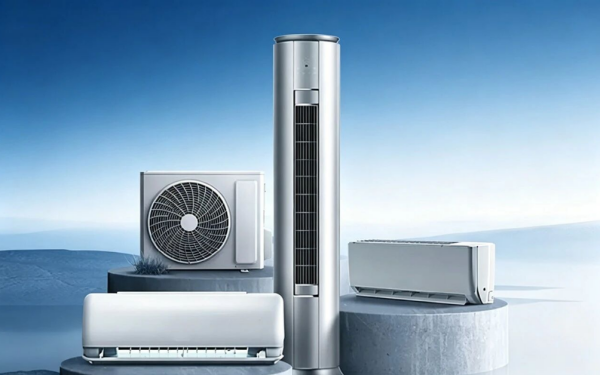
As global temperatures continue to rise, air conditioners have become an essential part of everyday life. The recent heatwaves across Europe have triggered a surge in air conditioner demand, placing greater emphasis on product performance, durability, and quiet operation.
Behind every high-performance air conditioner lies more than an efficient compressor or an advanced control system—the choice of material plays a critical role. To meet the growing demand for lightweight, low-noise, and long-lasting HVAC systems, engineering plastics are increasingly replacing traditional metal components in fan impellers, blower housings, motor brackets, structural frames, and other key parts.
So, which engineering plastics are most commonly used in air conditioners? What advantages does each material offer? And why are high-stiffness long glass fiber reinforced thermoplastics (LFT) becoming the preferred choice for next-generation HVAC components?
In this article, we'll explore the most widely used engineering plastics in air conditioners and explain how high-performance composite materials help reduce noise and vibration, improve structural strength, and enhance the overall efficiency and reliability of modern air conditioning systems.
Challenges in Selecting Engineering Plastics for Air Conditioners
Material selection plays a critical role in the design and performance of modern air conditioning systems. Beyond manufacturing costs, the right engineering plastic directly affects product durability, structural strength, noise levels, and long-term reliability. However, selecting the optimal material is not always straightforward. Air conditioner manufacturers typically face two major challenges:
1. Complex Material Selection
A wide range of engineering plastics—including PP, ABS, PA, PBT, PPS, and long glass fiber reinforced thermoplastics (LFT)—offer different advantages in terms of mechanical strength, heat resistance, dimensional stability, processability, and cost. Choosing the most suitable material for each component requires balancing application requirements with performance and budget. An inappropriate material choice can lead to increased noise and vibration, reduced service life, or unnecessary manufacturing costs.
2. Balancing Multiple Performance Requirements
Modern air conditioners demand materials that provide high stiffness while also delivering excellent heat resistance, flame retardancy, fatigue resistance, dimensional stability, and efficient injection molding performance. At the same time, manufacturers must achieve lightweight designs, maintain cost efficiency, and ensure high production productivity. Finding the right balance among these competing requirements remains one of the biggest challenges in HVAC material selection.
Engineering Plastics Used in Air Conditioners
01. ABS – The Preferred Material for Exterior Components
Typical Applications
ABS is widely used for visible exterior parts such as front panels, control panels, decorative covers, and other cosmetic components. These parts are the first elements consumers notice, making appearance, surface quality, and durability key design considerations.
Key Advantages
ABS offers an excellent surface finish with high gloss, making it ideal for premium-looking air conditioner housings. Its outstanding paintability also allows manufacturers to achieve a wide range of colors, textures, and decorative effects to meet different product designs.
In addition, ABS provides excellent impact resistance, helping exterior components withstand daily handling, accidental impacts, and long-term use while maintaining their appearance. Its good processability and cost-effectiveness have made ABS one of the most widely used engineering plastics for air conditioner exterior applications.
02. PP and Modified PP – The Cost-Effective Choice for Functional Components
Typical Applications
Polypropylene (PP) is widely used for non-load-bearing components such as air filters, drain pans, internal brackets, and various functional parts. While these components are not highly visible, they play an essential role in ensuring the reliable operation of the air conditioning system.
Key Advantages
PP offers excellent low-temperature toughness and good chemical resistance, allowing it to withstand moisture, cleaning agents, and a wide range of operating environments. Its low density, easy processability, and competitive cost make it one of the most economical engineering plastics for high-volume air conditioner production.
Why Modify PP?
Standard PP can be further enhanced with glass fiber reinforcement, flame-retardant additives, or mineral fillers to meet more demanding performance requirements. Modified PP delivers significantly higher stiffness, improved dimensional stability, enhanced heat resistance, and better flame-retardant performance while maintaining the cost advantages of conventional PP. As a result, it has become a preferred material for many structural and functional HVAC components where strength, safety, and cost efficiency must be carefully balanced.
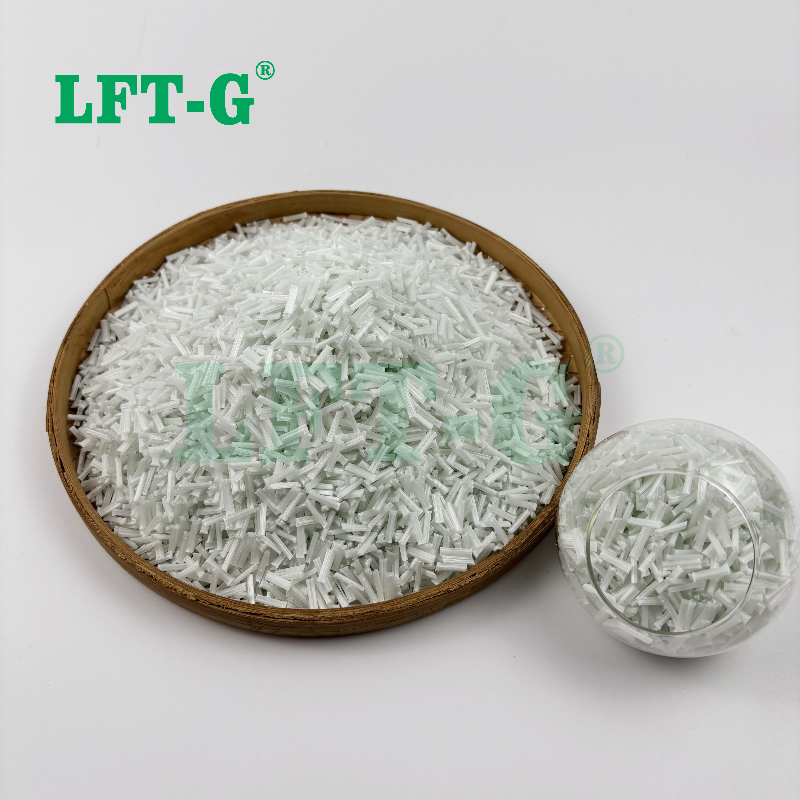
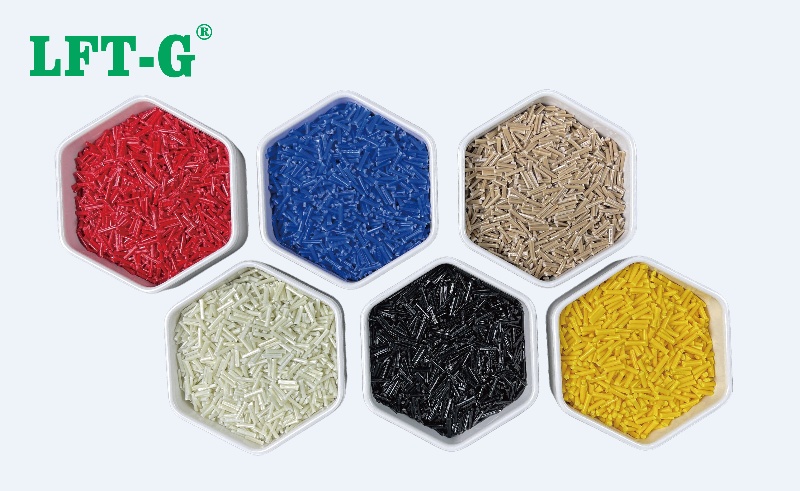
PP Long Glass Fiber Reinforced Thermoplastic (LGF-PP)
03. PC/ABS Alloy – The Balanced Solution for Premium Air Conditioners
Typical Applications
PC/ABS alloy is commonly used for structural parts and exterior housings in premium air conditioners, especially for thin-wall components that require both strength and an excellent surface finish.
Key Advantages
By combining the strengths of polycarbonate (PC) and ABS, PC/ABS offers better heat resistance and impact strength than ABS while providing easier processing and lower manufacturing costs than pure PC. This balance of mechanical performance, appearance, and processability makes it an ideal material for high-end HVAC applications.
04. PA (Polyamide) – The Core Material for High-Performance Structural Components
Typical Applications
Polyamide (PA), particularly glass fiber reinforced grades such as PA6 GF30, is widely used for fan blades, motor brackets, bearing supports, and other structural components exposed to continuous vibration, mechanical loads, and elevated temperatures.
Key Advantages
PA provides outstanding mechanical strength, wear resistance, and creep resistance, ensuring long-term structural stability under demanding operating conditions. It also maintains excellent performance across a wide temperature range, typically from -30°C to 120°C, making it well suited for air conditioner components that require long service life and reliable operation.
05. PBT and PET – Reliable Materials for Electrical and High-Temperature Applications
PBT: Ideal for Electrical Components
PBT is widely used in electrical control boxes, connectors, terminal blocks, and other components requiring excellent electrical insulation. It also offers fast injection molding cycles, good dimensional stability, and reliable performance under continuous thermal exposure, making it a preferred material for electrical applications in HVAC systems.
Reinforced PET: Built for High-Temperature Environments
Glass fiber reinforced PET is commonly used in air outlets, coil supports, and other components exposed to elevated temperatures. With excellent heat resistance—typically exceeding 200°C for reinforced grades—along with high stiffness and dimensional stability, reinforced PET ensures reliable performance in demanding thermal environments.
06. PU (Polyurethane) – The Key to High-Efficiency Thermal Insulation
Typical Applications
Polyurethane (PU) foam is widely used as the thermal insulation material between the inner and outer shells of air conditioners, filling cavities to improve thermal efficiency while also providing structural support.
Key Advantages
PU features an extremely low thermal conductivity, effectively minimizing heat transfer and reducing cooling energy loss. Its excellent insulation performance helps improve the overall energy efficiency of air conditioning systems while contributing to quieter operation and enhanced long-term durability.
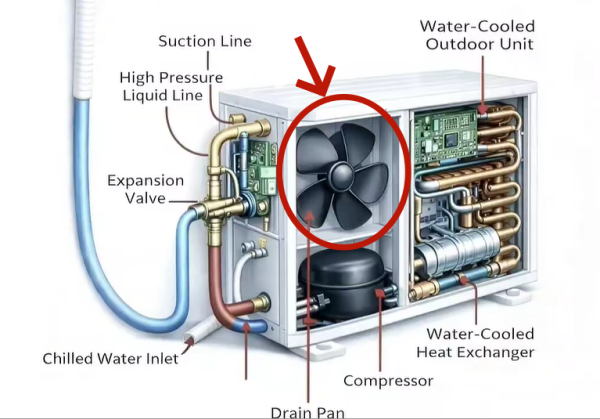
Advantages of Engineering Plastics for Air Conditioner Applications
Compared with general-purpose plastics, engineering plastics offer superior mechanical strength, heat resistance, flame retardancy, dimensional stability, and long-term reliability. These properties enable manufacturers to produce air conditioners that are lighter, quieter, more durable, and more energy efficient.
Each material offers unique advantages for different applications. ABS is ideal for exterior components, PA excels in high-load structural parts, while modified PP, PBT, PET, and PC/ABS are widely used in electrical and functional components. Selecting the right material for each application is essential to achieving the best balance between performance, manufacturability, and cost.
Why Choose Long Glass Fiber Reinforced Thermoplastics (LFT)?
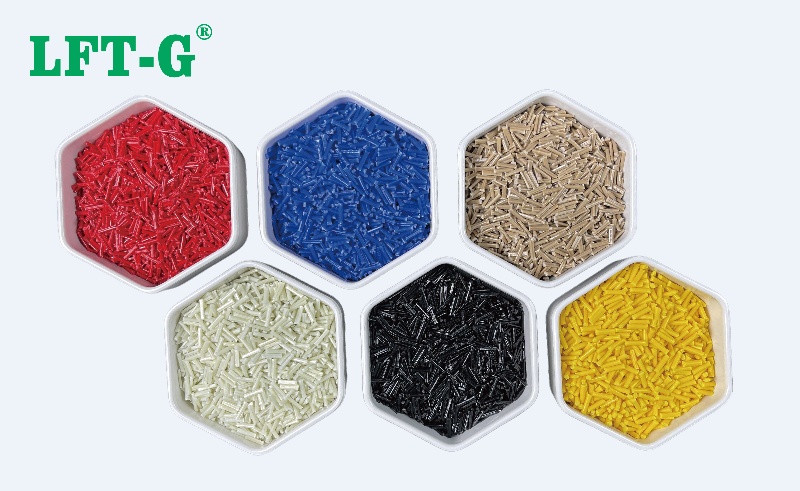
As air conditioners continue to evolve toward lightweight, low-noise, and high-performance designs, Long Glass Fiber Reinforced Thermoplastics (LFT) have become an ideal material for structural HVAC components. Compared with conventional reinforced plastics, LFT offers higher stiffness, better impact resistance, improved vibration damping, and superior dimensional stability.
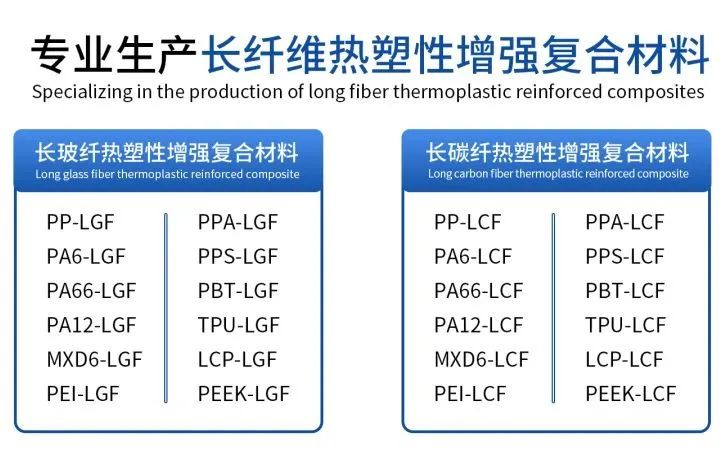
At Xiamen LFT Composite Plastics Co., Ltd., we provide high-performance PP-LGF, PA6-LGF, PA66-LGF, PPA-LGF, PPS-LGF, and customized LFT solutions to help HVAC manufacturers improve product performance, reduce noise and vibration, and achieve lightweight designs.